

Undergraduate Academic Excellence in Action

Majoring in history offers undergraduates diverse opportunities for growth and development both personally and professionally, as two current History Majors can attest. Baylor junior and History Major, Hannah Barine, was just awarded the prestigious McNair Scholarship and is hoping to go on to work in foreign policy or international relations. Graduating History Major Elise Choi was just recognized as one of two Outstanding History Students at J. Harry and Anna Jeanes Academic Honors Week and is pursuing her goal of joining the Air Force Graduate Law Program and serving as a Judge Advocate General Officer. Below, Barine and Choi reflect on their time in the History Department and how the study of history has shaped their lives.
Hannah Barine
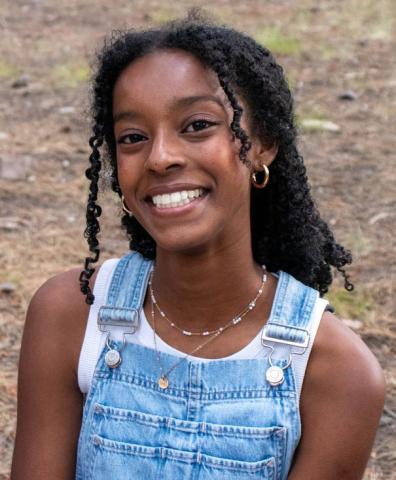
What year are you at Baylor and when do you plan to graduate?
I’m currently a junior, graduating in May 2027.
How did you decide to become a History Major?
My journey to becoming a History Major is a winding road with some detours. I’d wanted to be a history teacher since middle school, but as I studied music more, I began to lean in that direction, which led me to pursuing a B.M. in Music Composition. As a result, I was a composition major for my freshman and sophomore years, but I ended up having some health struggles that limited me from playing my primary instrument, the piano, and thus I was forced to change my major. I had previously added a History Minor spring semester of my freshman year, and so the decision was easy; I added a History Major last summer. I also changed my music major to a B.A. in Academic Music, allowing me to keep the credits I had amassed as a music major. In the end, I’ll be graduating in May 2027 with both a B.A. in History and a B.A. in Music.
So far, what has been your favorite aspect of studying history at Baylor?
I’ve enjoyed my classes! Baylor History has such an interesting course catalog, and I’ve learned so much from my professors here! My favorite classes have been the international history courses; I’ve especially enjoyed Dr. Correa’s Latin America and the Cold War course, as well as Dr. Watkins’ Nationalism in Modern France course.
Is there a particular period or area of focus that you gravitate towards?
I’m interested in the Cold War era to present, as well as understanding how governments are constructed and their power is dispersed internationally. The concepts of nationalism and interventionism have intrigued me.
How did you find out about the McNair Scholarship?
I found out about McNair through an email I received in the fall through the History Department.
Did you find the application process approachable, and would you recommend the scholarship to other eligible students wishing to pursue a PhD?
The process is simple and the instructions are listed out clearly on the application page, making it accessible for students. McNair is not a scholarship, rather a program that provides support to under-represented students in higher education. It’s unique as it provides both financial aid and professional experience, allowing students to build their CV’s. Since I was just admitted into the program, I can’t necessarily speak from experience, but from what I’ve observed, it sets up undergraduate students well for graduate school through its intense mentor-support system and federal funding.
Since the McNair Scholarship specifically supports undergraduates who wish to obtain a PhD, can you tell us a bit about your plans for the future in terms of what degree you’d like to pursue and how that might further your professional goals?
I eventually want to work in foreign policy or international relations, and obtaining a PhD would allow me to gain the knowledge and experience for this profession. I’m not exactly sure what program/degree I’ll apply to a masters program, but it will be within the history/political science realm.
Elise Choi

How did you decide to become a History Major?
When I first entered college, much of my academic interest was in the sciences, and I spent time studying biochemistry and working in a biology research lab. Over time, however, I realized that if I hoped to pursue a legal career, I also needed a broader intellectual foundation that would help me understand how institutions and societies develop over time. History offered exactly that. It trained me to analyze sources carefully, weigh competing interpretations, and understand the human motivations that shape law and policy. Choosing History allowed me to complement my scientific background with a deeper understanding of culture, politics, and historical context, which I believe is essential preparation for the study of law.
What have you enjoyed most about studying history at Baylor, and what is your favorite time period or area of focus?
What I have enjoyed most about studying history at Baylor is the emphasis on thoughtful discussion and engagement with complex questions. My favorite course was History of the French Revolution with Dr. Watkins. While the period itself is dramatic and sometimes tragic, what fascinated me most was the way the course examined individuals and ideas within a rapidly changing society. It showed how economic pressure, political rhetoric, public opinion, and institutional breakdown can interact to transform a nation. That kind of analysis made the past feel deeply human and surprisingly relevant. More broadly, I have enjoyed cultural history the most, particularly topics related to religion, women’s experiences, and the ways everyday people respond to larger political and social forces.
How has the study of history influenced your interest in law?
Studying history has profoundly shaped the way I think about law. Historical study teaches you that laws and institutions do not exist in isolation. They are created within particular cultural, political, and economic contexts, and they evolve as societies confront new challenges. Learning to examine primary sources, evaluate evidence, and consider multiple perspectives has strengthened the analytical habits that are central to legal reasoning. More importantly, history has taught me humility about institutions and a deeper appreciation for the responsibility that comes with shaping or interpreting the law.
What do you plan to do with your law degree?
My primary goal is to pursue the Air Force Graduate Law Program and serve as a Judge Advocate General officer. The opportunity to combine legal practice with public service and military leadership is very meaningful to me. Over the long term, I am also interested in areas where law intersects with science and policy, such as pharmaceutical regulation or administrative law. Whatever direction my career ultimately takes, I hope to practice law in a way that combines ethical responsibility and a genuine commitment to serving others.